Here's something that should terrify every SaaS founder and CMO: your ideal customer asked ChatGPT which tool to use in your category today — and your brand wasn't mentioned once. Not because you're bad. Because you're invisible in the search channels that are quietly replacing Google.
- What Is AI Search Visibility, Really?
- Why Most SaaS Brands Are Invisible Right Now
- Traditional SEO vs AI Search: The Shift You Can't Ignore
- Where Your SaaS Brand Needs to Show Up
- GEO and AEO: The New Disciplines You Must Know
- How to Fix Your AI Search Invisibility (Step-by-Step)
- How to Measure Your AI Search Visibility
- Frequently Asked Questions
Let's be direct. The search landscape changed — and most SaaS brands are still playing by the old rules. We're not talking about a small tweak to the algorithm. We're talking about a fundamental rewiring of how buyers discover, evaluate, and choose software.
According to G2's 2026 data, 51% of B2B software buyers now start their research in AI chatbots, and 76% use AI tools somewhere in the buying journey. Meanwhile, Gartner projects that 25% of all search volume will shift to AI interfaces by the end of 2026.
If your SaaS SEO strategy doesn't account for this shift, you're not just losing rankings — you're losing buyers before they ever visit your website.
What Is AI Search Visibility, Really?
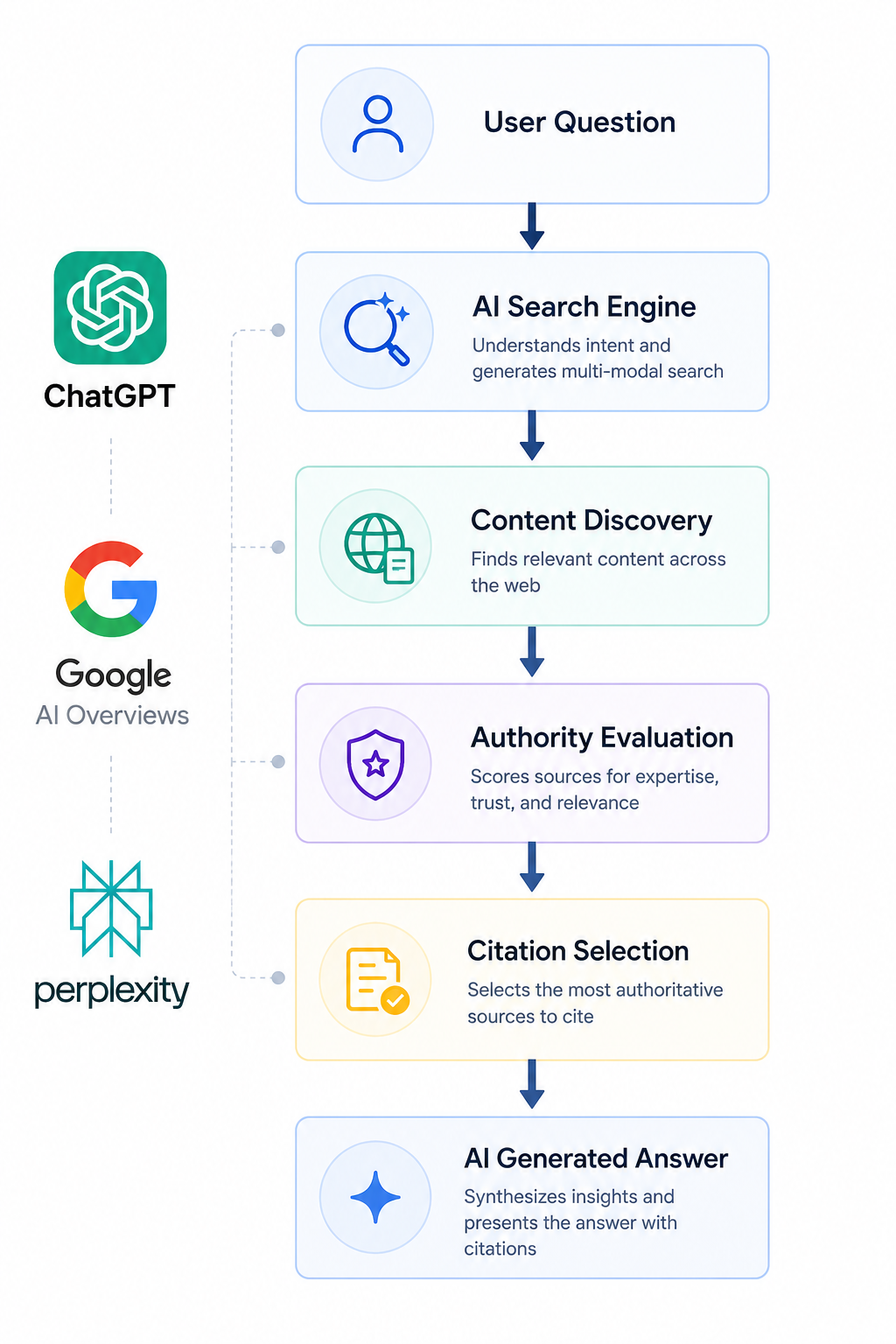
AI Search Visibility is how frequently — and how favorably — your SaaS brand appears in AI-generated answers across platforms like ChatGPT, Perplexity, Google AI Overviews, Gemini, and Claude.
Unlike a traditional search ranking (position 1, 2, 3 on Google), AI search visibility isn't about a blue link on a page. It's about whether an AI system recommends you, cites you, or even mentions your brand name when a buyer asks a question you should own.
Think of it this way: a potential customer types "What's the best SEO tool for a SaaS startup?" into ChatGPT. The AI doesn't give them 10 blue links — it gives them a confident, synthesized answer. If you're not in that answer, you don't exist to that buyer.
The New Definition: AI Search Visibility = How often AI systems cite, mention, and recommend your brand when buyers ask questions relevant to your product category — across ChatGPT, Perplexity, Google AI Overviews, and Gemini.
And here's what makes this genuinely alarming for most SaaS teams: you can be ranking #1 on Google for your top keyword and still be completely invisible in AI search. These are two separate games, with two separate rulesets.
Your Google ranking and your AI search visibility are entirely different metrics — and right now, most SaaS brands are only tracking one of them.
Why Most SaaS Brands Are Invisible Right Now
This isn't a reflection of your product quality. Some genuinely excellent SaaS companies are invisible in AI search right now, simply because they built their visibility strategy for a search environment that no longer exists.
Here's what's actually happening behind the scenes:
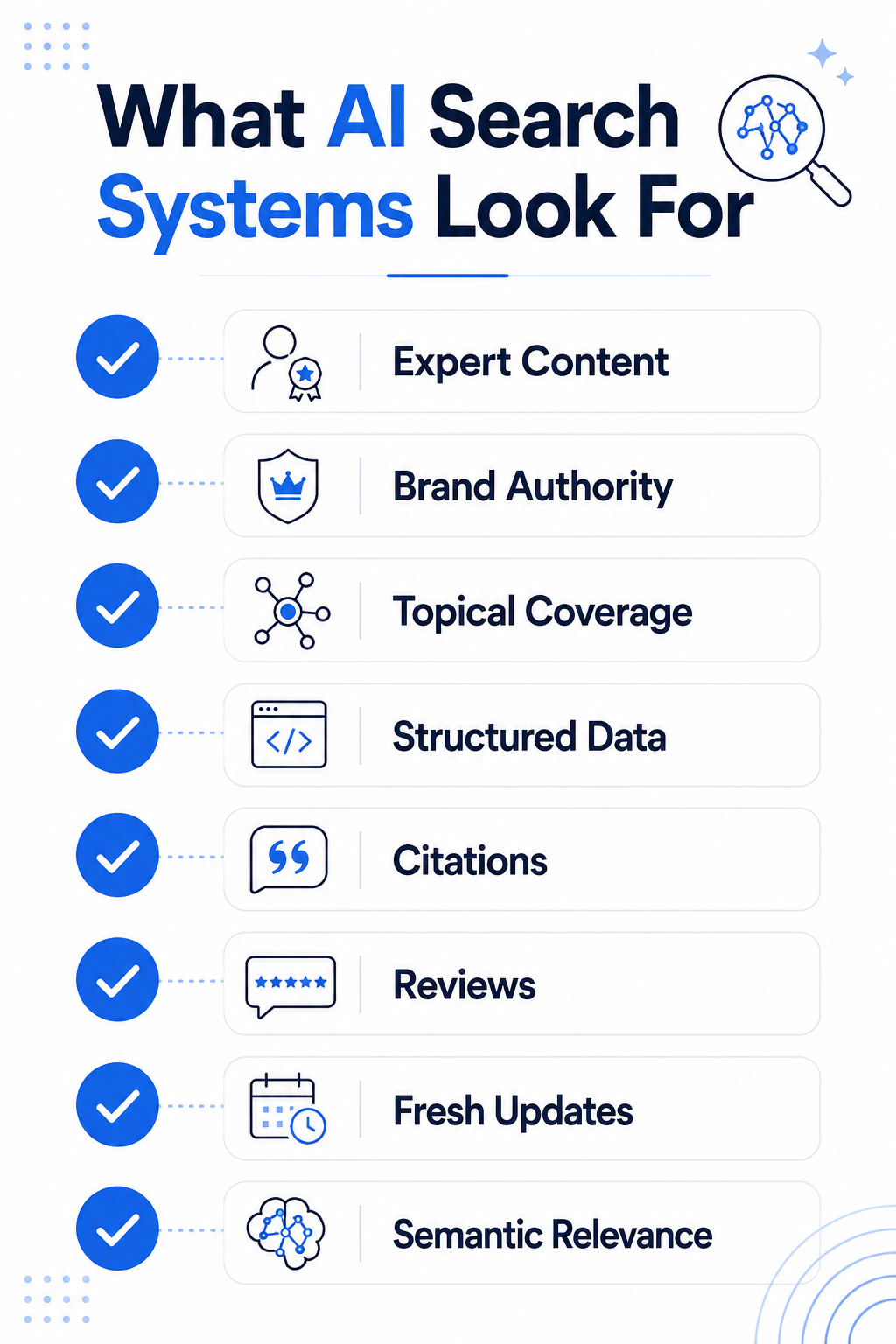
AI systems don't rank pages by keyword density. They understand topics, entities, and relationships. If your content isn't structured around clear entities (your brand, your category, your use cases), AI models won't recognize you as an authority worth citing.
AI systems pull from content that delivers self-contained, direct answers. If your blog posts are structured as long-form essays without clear, extractable answers — AI systems skip you entirely, even if your content is excellent.
AI systems like ChatGPT and Perplexity heavily weight third-party mentions — review sites, industry publications, analyst reports, and community discussions. If G2, Reddit, TrustRadius, and industry blogs rarely mention your brand, AI systems won't trust you enough to cite you.
Schema markup — FAQ schema, how-to schema, organization schema — dramatically improves how AI systems parse and understand your content. Most SaaS sites have little to none of it, even in 2026. Our technical SEO services fix exactly this.
What questions are your buyers actually asking AI systems at awareness, consideration, and decision stages? Most SaaS brands have never built this prompt map — which means they have no idea where they're invisible and where they're showing up.
The Hard Truth: You can have a technically perfect website, great UX, and a beautifully written blog — and still be completely absent from the conversations that lead to SaaS buying decisions in 2026. Traditional SEO metrics tell you almost nothing about your AI search visibility.
Traditional SEO vs AI Search: The Shift You Can't Ignore
To understand why your current strategy is failing, you need to understand how fundamentally different AI search is from traditional search. This isn't evolution — it's a different paradigm entirely.
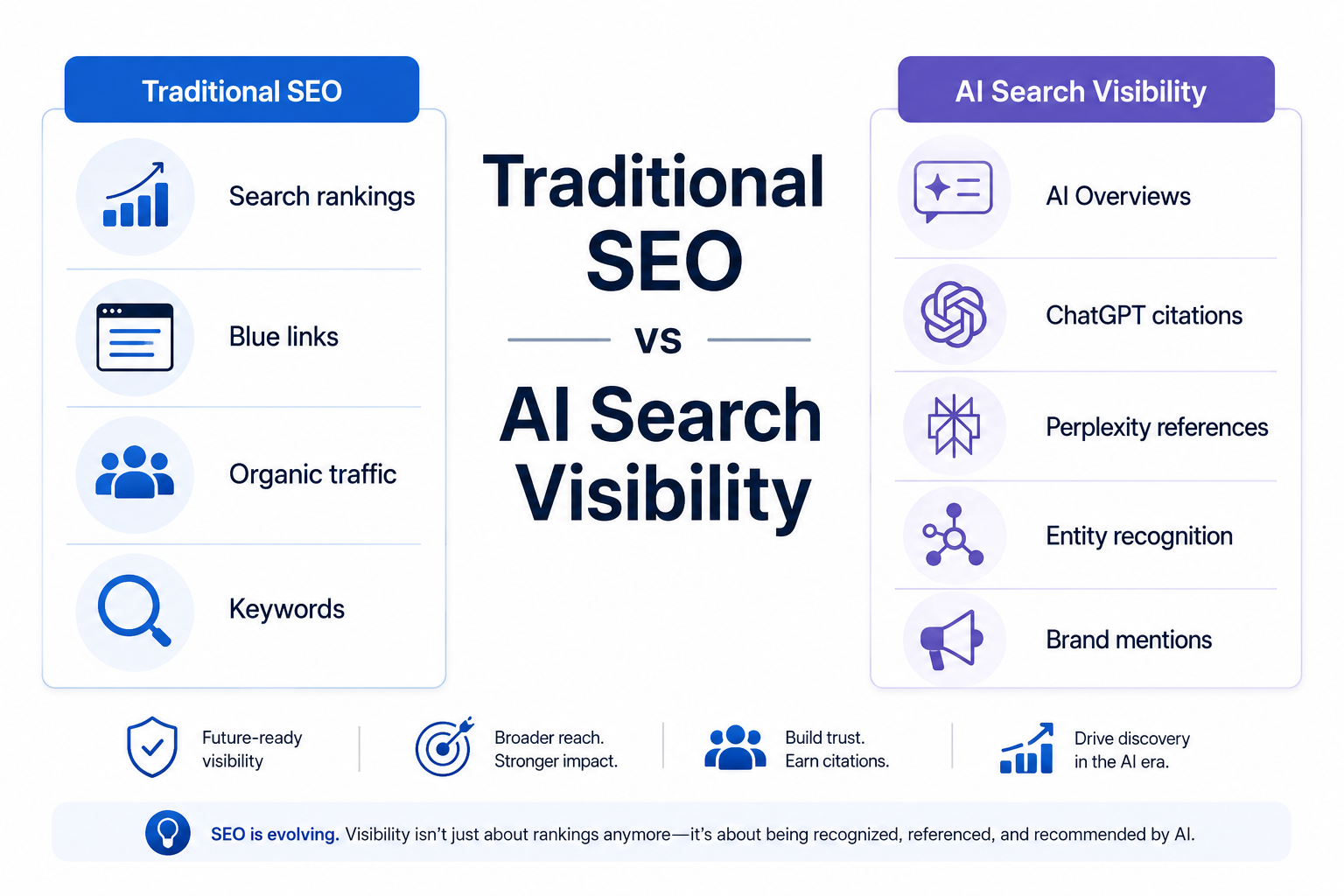
The search experience your buyers are using looks nothing like what your SEO strategy was built for.
| Dimension | Traditional SEO (2019–2023) | AI Search (2024–2026+) |
|---|---|---|
| Result format | 10 blue links, ranked by position | Synthesized AI answer with 3–5 citations |
| Success metric | Keyword ranking position | Brand citation rate & share of voice |
| Content goal | Rank for target keyword | Be cited as the authoritative answer |
| Optimization target | Google crawlers & algorithm | LLMs, AI Overviews, answer engines |
| Content structure | Long-form keyword-rich essays | Self-contained, direct, extractable answers |
| Key trust signals | Backlinks from high-DA sites | Third-party citations, reviews, community mentions |
| Buyer journey stage | After intent is formed (search) | During intent formation (discovery) |
The most dangerous part of this shift? Buyers are using AI before they ever form their shortlist. By the time they run a Google search, they've already been influenced by what ChatGPT or Perplexity told them. This means AI search is happening earlier in the funnel — and shaping who even gets considered.
AI search isn't replacing Google. It's replacing the moment before Google — the formless curiosity that turns into a shortlist. If you're not in that moment, you're not in the consideration set.
Is Your SaaS Brand Invisible in AI Search?
Get a free AI visibility audit and find out exactly where you're missing in ChatGPT, Perplexity, and Google AI Overviews.
Get Your Free AI Visibility Audit →Where Your SaaS Brand Needs to Show Up
There isn't one "AI search" — there are multiple platforms, each with a different audience, different content preferences, and different citation mechanisms. Here's a breakdown of what matters for SaaS brands specifically:
Controls 87.4% of all AI referral traffic. Prioritizes vendor content and authoritative pages. The #1 priority for any SaaS AI visibility strategy.
Leans heavily on community sources — Reddit, G2, TrustRadius. Excellent for comparison and "best tool for X" queries where buyers are close to a decision.
Appears on 25% of Google searches (48%+ in some categories). Pulls from structured, authoritative content. Overlaps with traditional SEO but follows different rules.
Google's AI assistant is increasingly integrated into Workspace products. B2B buyers using Google's ecosystem encounter Gemini answers during their workday research.
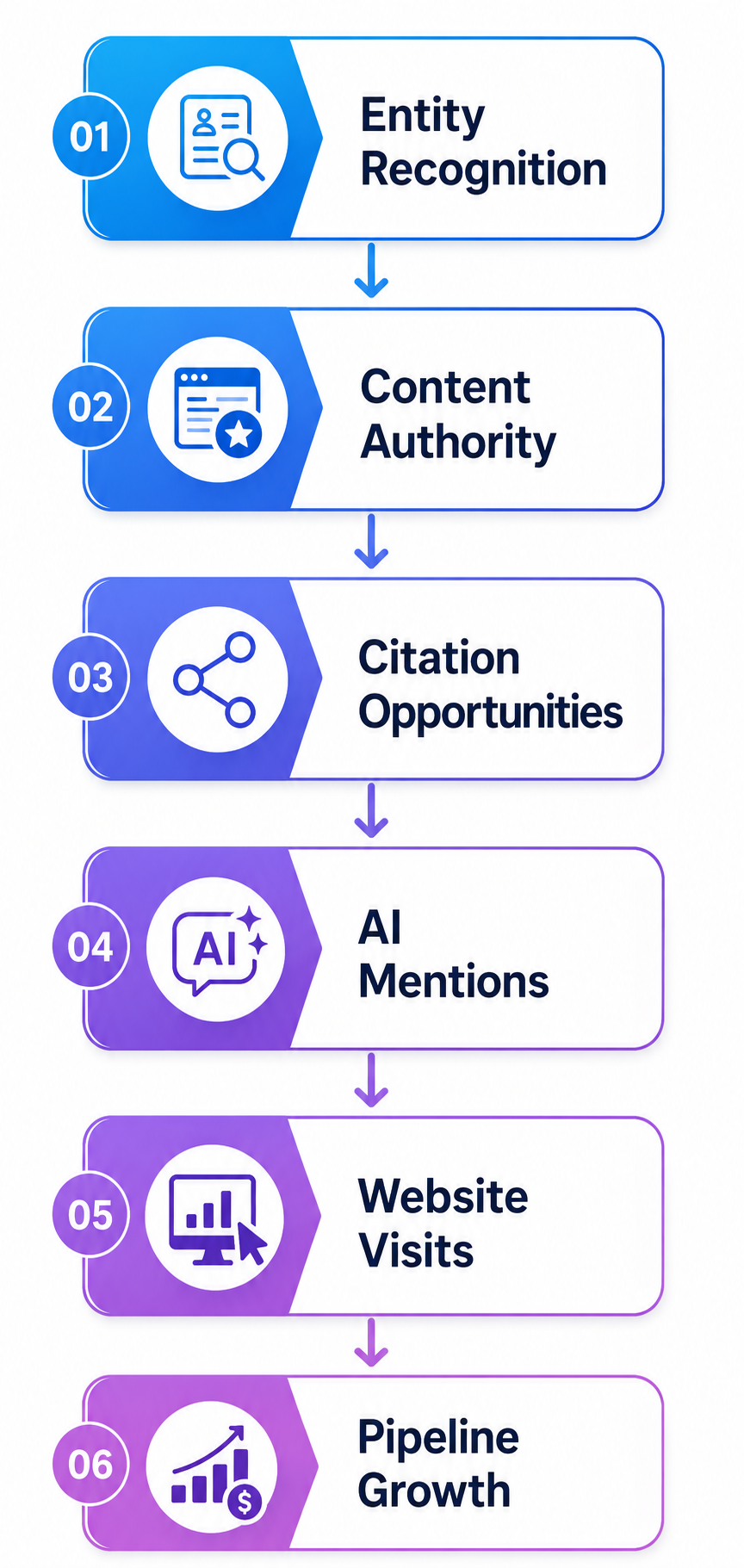
AI brand mentions are the new first-page rankings. Top SaaS brands are tracked getting cited 31+ times per month across major AI platforms.
The key insight from the data: top-quartile SaaS brands are getting 31+ citations per month across major AI platforms, while bottom-quartile brands get fewer than 3. That gap is the new competitive moat — and it's widening fast.
The brands winning AI visibility aren't necessarily the biggest or most well-funded. They're the ones who invested early in AI Search Optimization and built content designed to be cited.
GEO and AEO: The New Disciplines You Must Know
Two terms are dominating the conversation among forward-thinking SaaS marketing teams in 2026. If you haven't encountered them yet, you need to understand them right now.
What Is GEO (Generative Engine Optimization)?
GEO is the practice of optimizing your content and digital presence so that generative AI systems — ChatGPT, Perplexity, Gemini — include your brand in their synthesized answers. Think of it as the AI-era equivalent of ranking #1 on Google, except instead of a ranking position, the prize is a citation in an AI response.
GEO involves:
- Writing content with clear, extractable answers to specific buyer questions
- Building topic authority across your entire product category
- Earning third-party citations across trusted industry sources
- Establishing clear entity signals so AI knows exactly who you are and what you do
What Is AEO (Answer Engine Optimization)?
AEO is the discipline of structuring your content so it's easily pulled into AI-generated answers. Where GEO focuses on the big picture (overall presence and authority), AEO focuses on the execution level — how individual pieces of content are structured, formatted, and tagged.
A strong AEO content piece:
- Opens each section with a direct, self-contained answer
- Uses FAQ schema, HowTo schema, and Article schema
- Includes fresh, dated statistics that AI systems prefer to cite
- Uses tables and structured lists that LLMs extract 40% more reliably than paragraphs
GEO and AEO aren't replacements for traditional SEO — they're layers on top of it. You still need strong fundamentals: fast site, solid technical SEO, quality backlinks. But without GEO and AEO, you'll dominate Google and remain invisible to the 51% of buyers who started their research in an AI chatbot.
How to Fix Your AI Search Invisibility (Step-by-Step)
Good news: this is fixable. And the brands that move first are going to build a competitive moat that latecomers will struggle to close. Here's the framework we use at RankSense AI for SaaS brands:
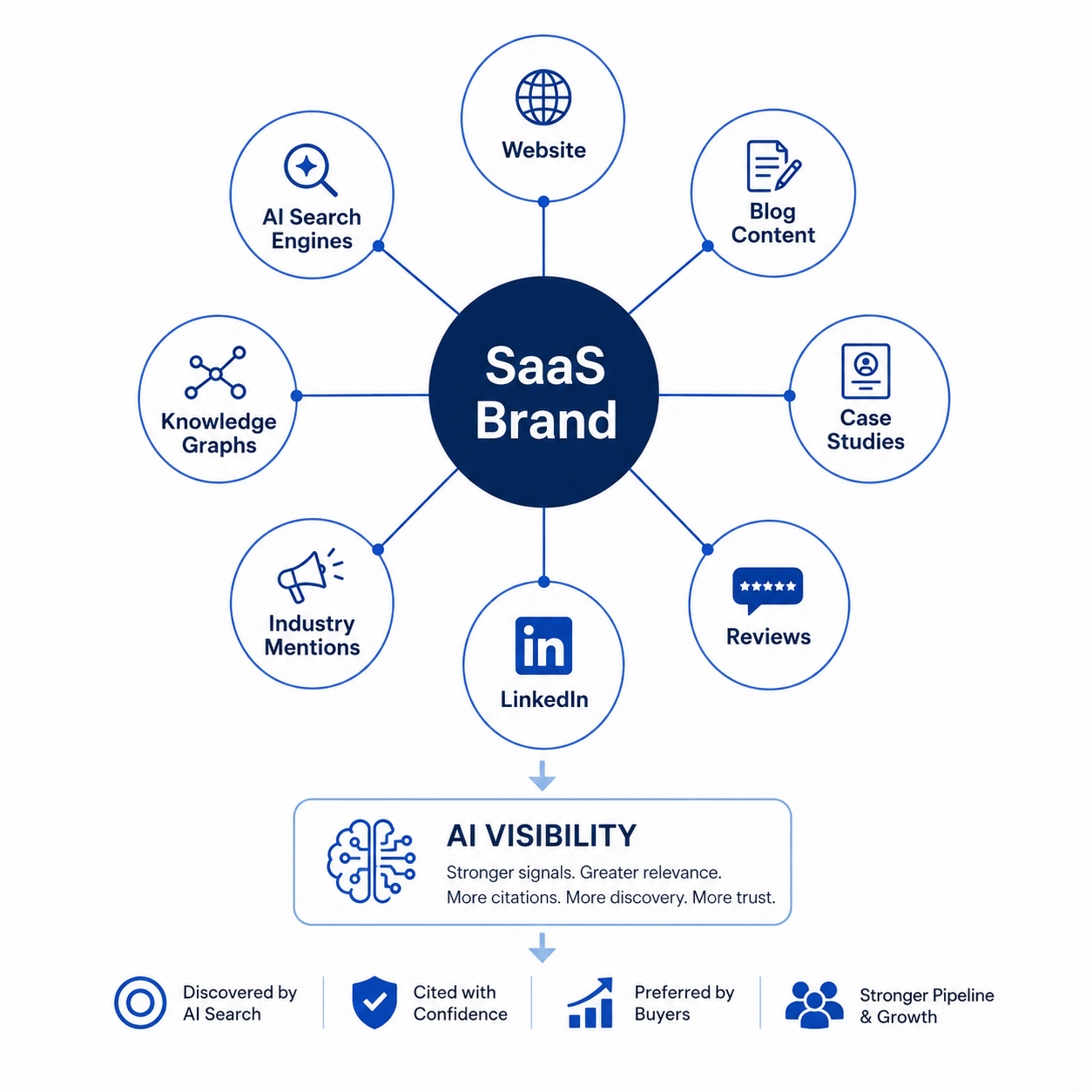
Building AI search visibility is a systematic process — not a one-time fix. Here's how RankSense AI approaches it for SaaS brands.
Before you optimize, you need to know where you stand. Build a library of 50–100 buyer intent prompts across awareness, consideration, and decision stages. Run them manually across ChatGPT, Perplexity, and Google AI Overviews weekly. Document where you appear, where you don't, and how competitors are being cited. Our AI SEO audit does exactly this.
Map every piece of content to a clear entity — your brand, your product category, your core use cases, your target ICP. Make sure AI systems can unambiguously understand what your brand does, who it serves, and why it's authoritative. This is the foundation of any serious AI SEO strategy.
Every section of every piece of content should open with a direct, self-contained answer. Use headers that mirror real buyer questions. Include tables, numbered lists, and comparison structures — LLMs extract these 40% more reliably. Add FAQ schema and HowTo schema wherever appropriate. Our content strategy services are built around this principle.
Get mentioned on G2, TrustRadius, Capterra, and Reddit. Pursue coverage from SaaS-focused publications and analyst blogs. Run digital PR campaigns targeting the domains that AI systems trust and cite most often. Perplexity in particular leans heavily on community and review sources — so your G2 reviews are more valuable than ever.
Implement comprehensive schema markup — Organization, Product, FAQ, HowTo, Article schemas minimum. Ensure your site loads fast, is fully indexed, and has clean crawlability. AI systems can't cite you if they can't reliably access and understand your content. This is what our technical SEO services are built for.
AI visibility is not a set-and-forget play. 40–60% of sources cited in AI responses rotate every month. You need a consistent monitoring cadence: run your prompt library weekly, track citation share across platforms, and update content that's losing visibility. The brands that close citation gaps fastest are those treating AI visibility as a measurable strategic priority — just like their growth SEO programs.
Real Results: One of our SaaS clients went from 0 AI citations to being mentioned in 47+ monthly AI responses across ChatGPT and Perplexity within 90 days of implementing this framework. That translated directly into qualified inbound leads who arrived already knowing our client's brand — pre-educated and closer to conversion.
How to Measure Your AI Search Visibility
You can't manage what you can't measure. The traditional SEO dashboard you're using right now — rankings, organic traffic, domain authority — tells you almost nothing about your AI search visibility. You need a different measurement framework.
The Brand Visibility Score (BVS)
BVS is the emerging standard metric for AI visibility: the percentage of relevant buyer prompts in your category that return a mention of your brand. A BVS climbing from 12% to 28% over a quarter is a stronger signal of momentum than a static 35%.
Key Metrics to Track
How often your brand URLs are cited in AI responses across ChatGPT, Perplexity, and Google AI Overviews. Track weekly with a consistent prompt library.
How often you're mentioned versus competitors when buyers ask category-level questions. This is the AI equivalent of SERP share of voice.
Which buyer questions actually trigger your brand to be mentioned? Map your prompt gaps to content creation priorities.
When AI does mention your brand, how is it describing you? Positive, neutral, or negative? Are the right strengths being surfaced for your ICP?
Pro Tip: Start with just 50 prompts across your buyer journey stages. Run them manually in ChatGPT and Perplexity twice a week. After 30 days you'll have enough data to identify your biggest visibility gaps — and prioritize your content investments accordingly. Our SEO audit services include a full AI visibility baseline as part of every engagement.
Frequently Asked Questions

Stop Being Invisible Where Your Buyers Are Looking
Get a free AI visibility audit and a clear picture of where your SaaS brand stands in ChatGPT, Perplexity, and Google AI Overviews — and exactly what to do about it.

Author: Irfan Dar
Irfan Dar is an SEO professional with 4+ years of experience in SEO, performance marketing, and digital analytics. He specializes in technical SEO, content strategy, on-page optimization, keyword research, AEO (Answer Engine Optimization), and GEO (Generative Engine Optimization). At RankSenseAI, Irfan focuses on helping businesses improve their visibility across traditional search engines and emerging AI search platforms. His work covers technical SEO, content optimization, AI search visibility, structured data, entity optimization, and strategies designed to help brands get discovered across search experiences such as Google AI Overviews, ChatGPT, and other AI-powered platforms. He also works with tools and platforms including Google Search Console, GA4, Google Tag Manager, SEMrush, Screaming Frog, Google Ads, Meta Ads, and Looker Studio. Irfan believes effective SEO is not just about rankings. It is about creating useful, technically sound content and building the signals that help search engines and AI systems understand, trust, and surface a brand.