
May 2026 Core Update Recovery: A Calm, Data-Backed Plan
Your traffic chart took a cliff dive this week and your stomach dropped with it. You refresh Search Console every hour hoping the line corrects itself. We see this panic every time Google ships a broad update, and we want to say the thing nobody says loudly enough: breathe. A core-update drop is rarely the disaster it feels like at 9pm on a Friday.
May 2026 Core Update recovery starts with one truth: a core update is a re-ranking of the web, not a penalty on your site. Google rolled this update out on May 21, 2026, with a rollout window of up to two weeks. Below is exactly what changed, what Google has actually confirmed, and the calm, evidence-led recovery plan we use with our own clients.
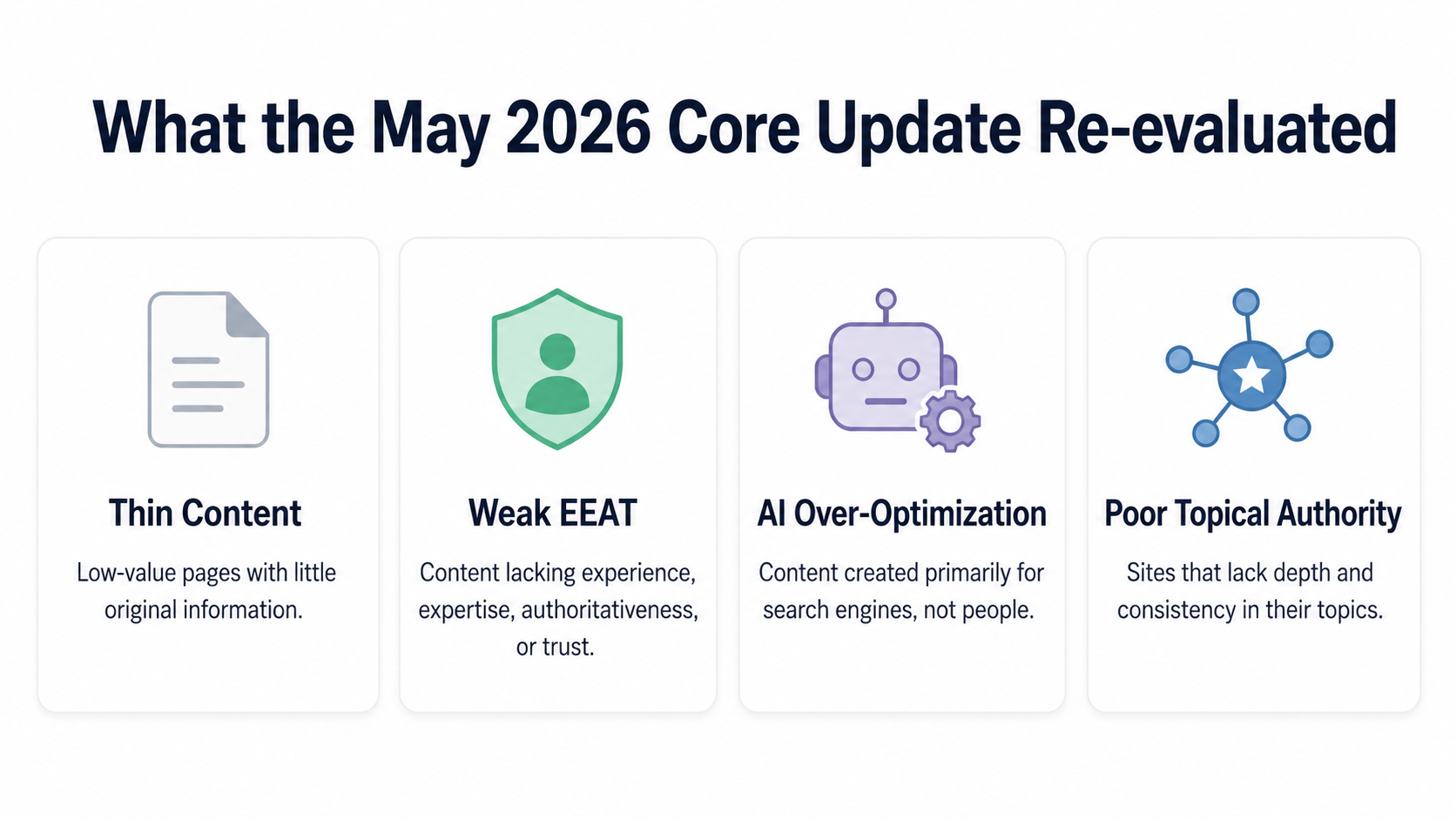
The May 2026 Core Update re-weights how Google scores quality across the whole index.
What the May 2026 Core Update Actually Is
The May 2026 Core Update is a broad change to Google's ranking systems that re-evaluates how relevance, quality, and trust are scored across billions of pages at once. It is not a manual action and it does not target individual sites. Google launched it on May 21, 2026 and said the rollout could take up to two weeks to settle.
Google's own framing matters here, because it shapes the entire recovery mindset. In its long-standing core-update guidance, Google compares an update to refreshing a list of the best movies: a few years on, the list naturally changes as new, more deserving titles appear. Your page did not get worse. The competition got re-scored, and sometimes a rival simply got rated higher.
That distinction is the foundation of everything below. A core update reshuffles a category to surface what Google now judges as the most satisfying content. If you slipped, it usually means relative quality, not a rule you broke. This is why a thoughtful independent SEO audit beats frantic guesswork every single time.
| Core update (re-ranking) | Spam action / manual penalty |
|---|---|
| Re-scores quality across the whole index | Targets specific policy violations |
| No message in Search Console | Manual action shows in Search Console |
| "Nothing specific to fix" per Google | Clear violation must be fixed and reviewed |
| Recovery often waits for the next update | Recovery follows reconsideration |
What Changed, and Who Moved
Google published no companion blog post and no special guidance for this update, repeating the exact boilerplate it used in March 2026. That continuity is the strongest early signal we have: the May update appears to reinforce March's direction rather than reverse it. So the smartest read on May is to study who won and lost in March.
The March 2026 pattern was striking. Lily Ray's team at Amsive analyzed more than 2,000 domains and described it as a first-party, official-source correction, with visibility tilting toward authoritative, brand-owned, and government domains and away from user-generated content and comparison aggregators. YouTube alone reportedly shed around 567 visibility points, an almost unprecedented swing at that scale.
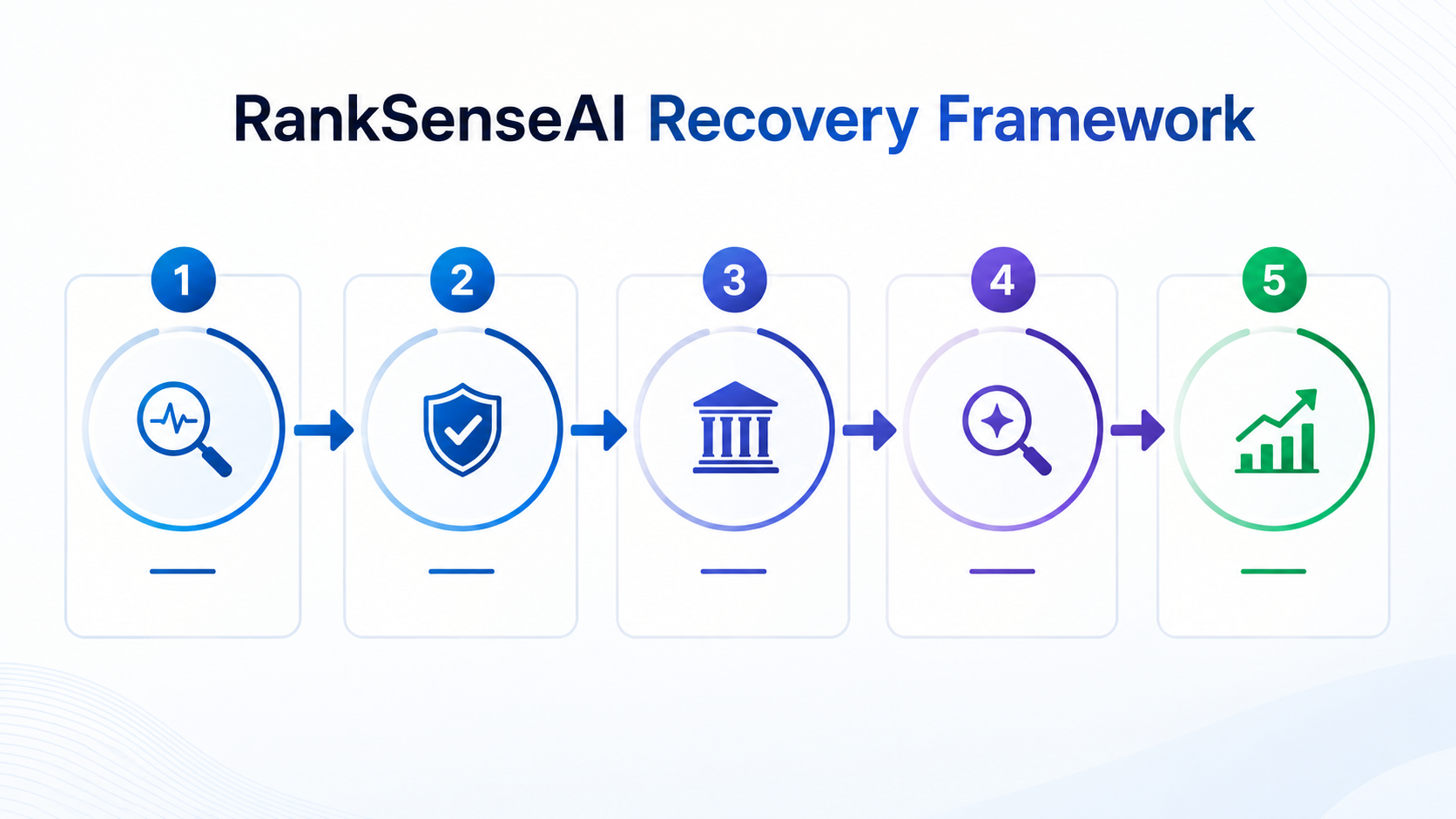
The 2026 pattern: original, first-party, expert content rises; thin and templated content falls.
Independent analyses agree on the through-line. One review of the March update found thin, affiliate, and templated content dropping roughly 30-50% in visibility, while sites with original research, expert authorship, and genuine first-hand experience gained around 15-25%. The signal is blunt: experience and originality are winning, and content built mainly to chase rankings is losing.
Tool methodologies disagree, and that nuance protects you from bad decisions. For March, SISTRIX UK showed Reddit and Instagram as small winners while Amsive's global dataset showed both as significant losers. Both are correct within their own method. Lily Ray also noted Reddit and Indeed rebounded after the rollout window closed, so an early "loser" snapshot is not a final verdict.
How to Diagnose Your Drop Without Panicking
Diagnose a core-update drop by confirming the timing in Search Console, isolating which pages and queries fell, and judging the size of the move before touching anything. The first three to four days of any rollout are noisy, so early ranking wobble is not a reliable signal of where you will actually land.
Start with evidence, not emotion. Open Google Search Console, compare the four weeks before May 21 with the days since, and look at impressions and average position, not just clicks. Segment by page and by query so you can see whether one template tanked or the whole site softened. Clean analytics and tracking is what makes this readable instead of a guessing game.
| What you see | What it usually means | First move |
|---|---|---|
| Small slip (position 2 to 4) | Normal re-ranking churn | Hold steady, do not edit winning pages |
| Large drop (position 4 to 28) | Quality gap on those pages | Deeper content and intent review |
| Whole-site decline | Site-wide quality signal | Audit thin and templated clusters |
| One section only | Template or topic weakness | Fix that cluster, leave the rest |
One honest caveat for 2026: this update landed only days after Google I/O, where AI Mode was pushed further into the default experience. Some of the volatility you are seeing may be AI surfaces reshaping clicks, not the core update alone. Separating those two forces is exactly where experienced SEO consulting earns its keep.
Mistakes That Make Recovery Slower
The fastest way to delay recovery is to make panicked, surface-level changes during the rollout. Google is explicit that there are no magic signals to flip, and that cosmetic tweaks made only to look higher-quality are not what its systems reward. Slow down, and avoid the moves below that quietly set most sites back.
- Mass-deleting pages on day three based on noisy, unsettled data.
- Cosmetic "quality" signals like adding a fake byline or a date where no real author or update exists.
- Rewriting pages that still rank well and accidentally breaking what works.
- Chasing the algorithm instead of fixing genuine user value.
- Publishing more thin content to "make up" for lost traffic, which deepens the hole.
There is a deeper lesson here about how the content was made. At a 2025 Google Search Central meetup, Google confirmed that using generative AI is not inherently problematic. The violation is publishing content primarily to generate search traffic, especially at scale. AI as a drafting aid is fine. AI as a thin-content factory is precisely what 2026 updates keep punishing, which is why human-led SEO content writing still wins.
Our 6-Step May 2026 Recovery Plan
A sound recovery plan improves real content quality holistically rather than reverse-engineering a single fix, because core updates reward relative quality across a category. Below is the sequence we run with clients, ordered so the highest-leverage, lowest-risk work happens first while the rollout finishes settling.
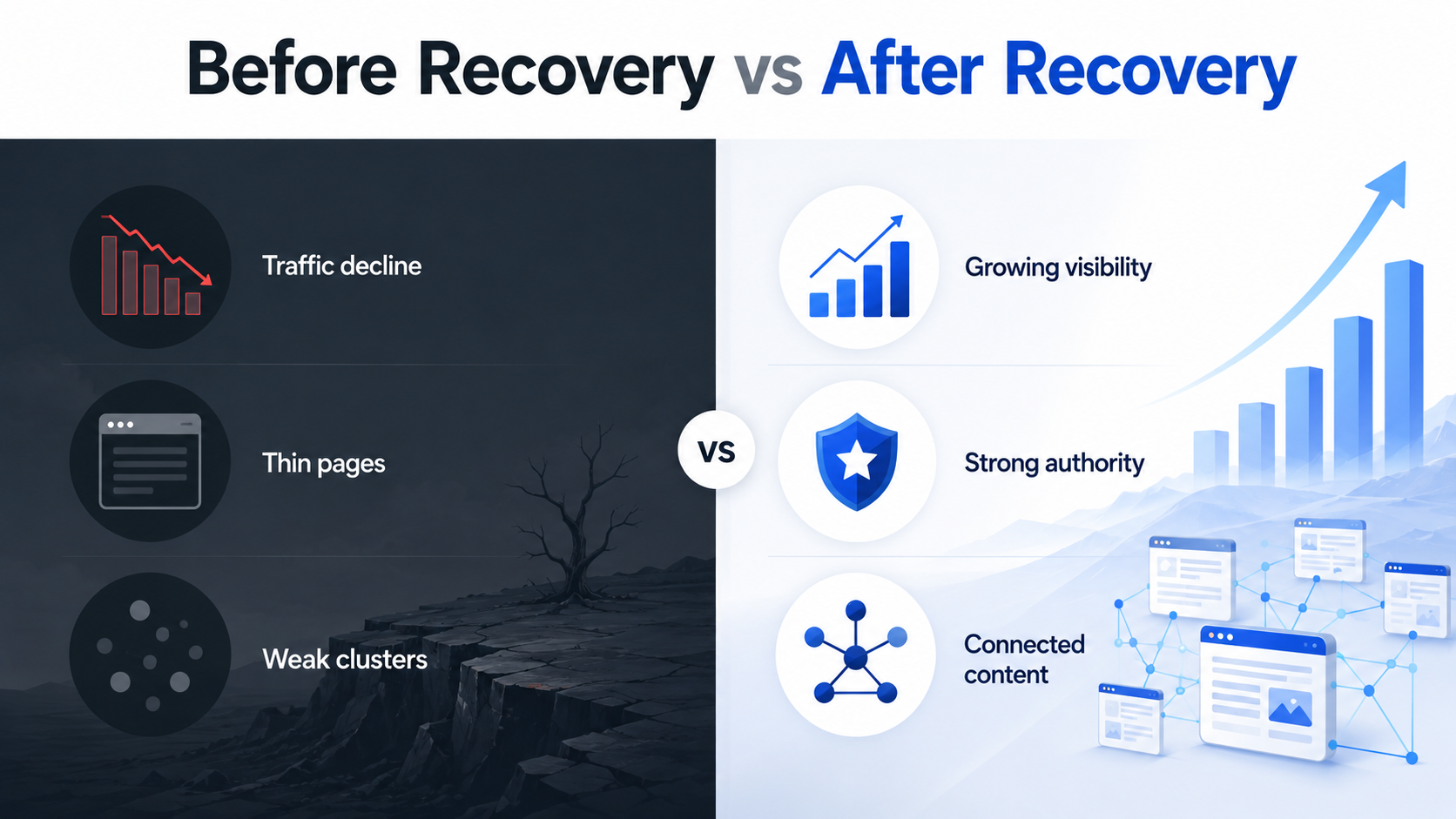
Recovery is a cycle: stabilize, diagnose, improve, then earn the rebound on the next update.
Step 1 - Wait for stabilization. Let the rollout complete before drawing conclusions. Rankings keep settling for roughly a week after the official end, and many early "losers" quietly recover in that window.
Step 2 - Build a clean baseline. Export Search Console and GA4 data, screenshot key rankings, and define the exact pages and queries that fell. You cannot prove recovery later without a before picture now.
Step 3 - Audit content against Google's questions. Use Google's "helpful, reliable, people-first" self-assessment honestly. Where is the original insight, the first-hand experience, the reason to trust this page over a competitor's?
Step 4 - Improve depth and experience, not decoration. Add proprietary data, real examples, and genuine expertise. Strengthen author identity and credentials, because experience and authorship are core EEAT signals Google leans on harder each cycle. A funnel-aware content strategy keeps these improvements pointed at revenue, not vanity.
Step 5 - Shore up technical and authority foundations. Technical fixes often show results fastest, sometimes within days. Check Core Web Vitals, since a large share of sites still fail the 200ms INP threshold in 2026, and earn credible links so authority compounds. Strong technical SEO and real link building are the difference between a flat line and a rebound.
Step 6 - Be patient and consistent. Google states that improvements are not a guarantee of recovery, and that impacted content often will not bounce back until a future broad core update. The next one is likely around mid-2026, so treat this as a compounding investment, the philosophy behind our growth SEO retainers.
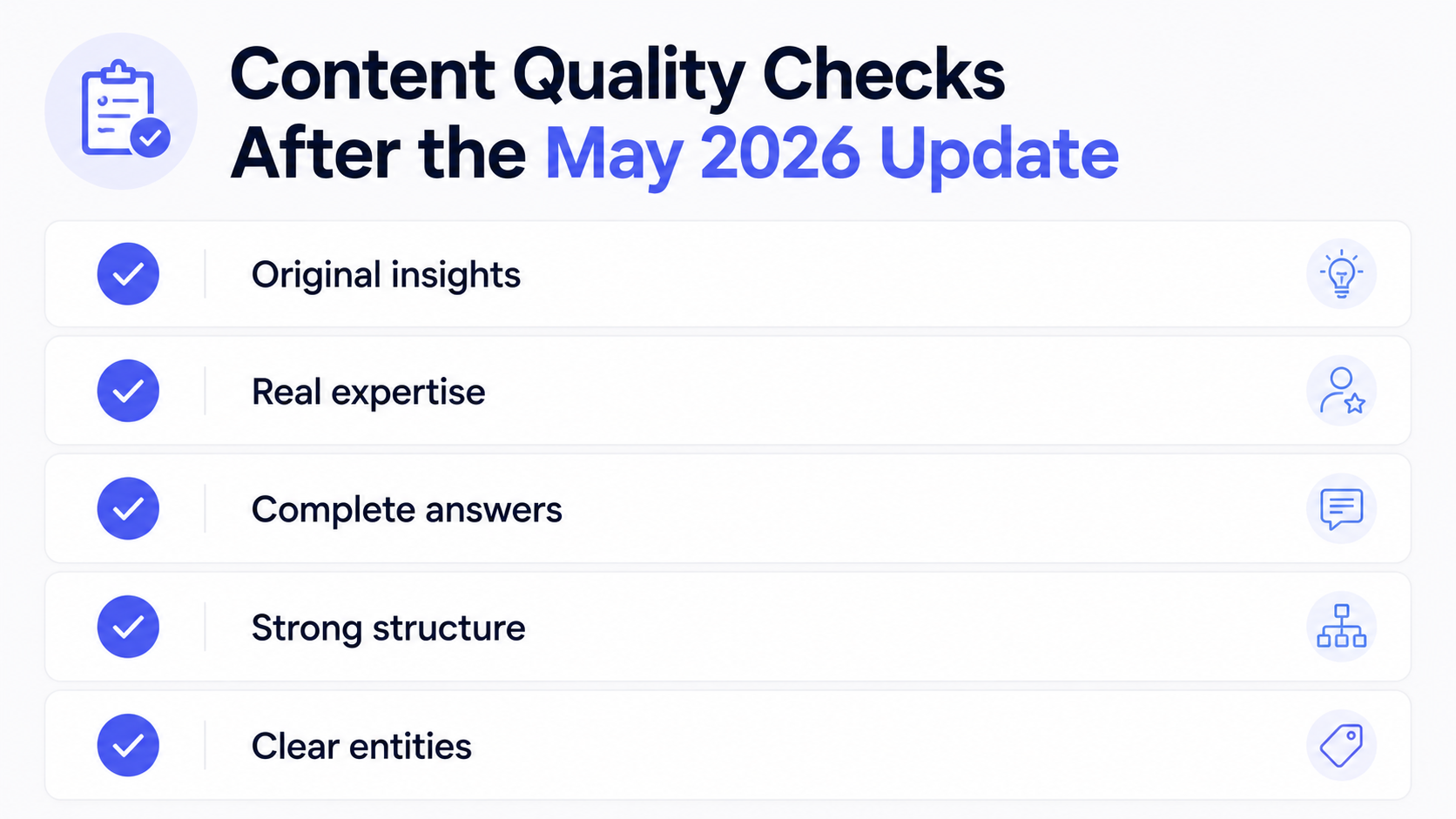
Our recovery audit checklist, built around Google's people-first content questions.
Why AI Search and GEO Change Recovery in 2026
Recovery in 2026 is no longer only about blue-link rankings, because a growing share of queries are answered inside AI Overviews and AI Mode before anyone clicks. Winning back visibility now means being citable by AI engines, not just ranked by Google. This is where modern recovery splits from the old playbook.
The mechanics overlap beautifully with what core updates reward. The same original data, clear structure, and expert authorship that lift you in a core update also make your content extractable and citable by ChatGPT, Perplexity, and Google's AI answers. Recovering the right way future-proofs you for both surfaces at once.
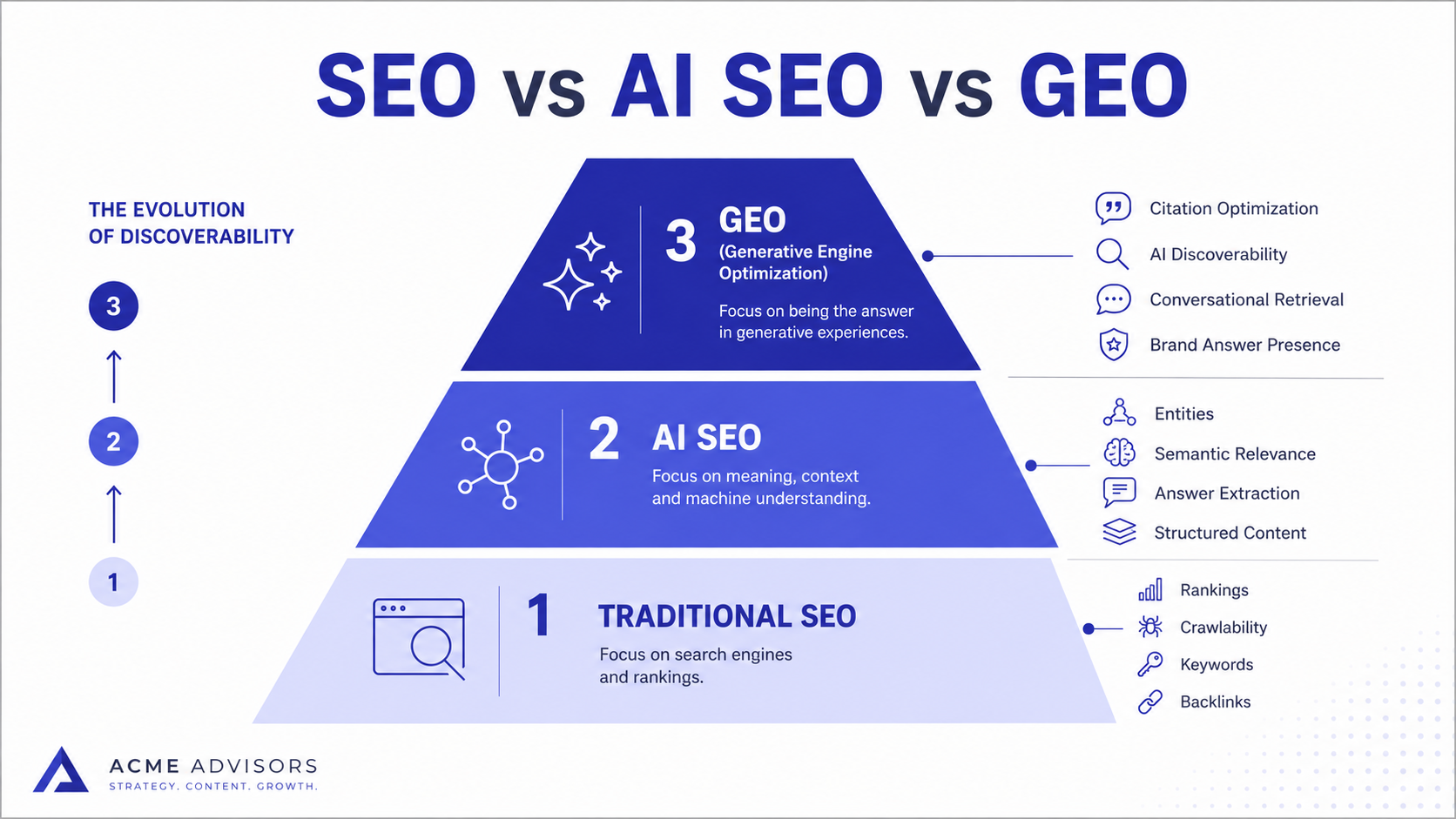
SEO gets you ranked. AI SEO and GEO get you cited. In 2026 you need all three.
So bake answer-first structure into every page you fix: lead each section with a direct answer, support claims with cited statistics, and keep your best content ungated. Treating AI visibility as core scope, not an afterthought, is the heart of our AI SEO services, and the brands structuring for citation today are the ones recovering with room to spare.
Not sure if the update hit you or AI Overviews did?
Get an independent read on your May 2026 traffic drop, plus a clear next-90-days recovery roadmap. No long contracts, no fluff.
Get a Free SEO Audit ->Our Honest View, From RankSenseAI
Here is our straight take: the May 2026 Core Update is good news disguised as bad news for anyone doing the work properly. Google is repeatedly rewarding original, experience-led, first-party content and demoting thin, templated, search-first pages. If you got hit, the update is handing you a map, not a punishment.
We will be blunt about the uncomfortable part too. If your growth leaned on mass-produced AI articles, scaled affiliate templates, or pages written for crawlers instead of people, this is not a dip you wait out. It is a signal to change the model. The brands we see recover fastest stop chasing volume and start building genuine authority.
The encouraging flip side, confirmed across multiple 2026 analyses, is that recovery is absolutely possible when you fix root causes rather than symptoms. We have walked clients through exactly this, and the pattern holds: improve real quality, strengthen technical foundations, earn trust, and the next update tends to reward you. That is the entire promise behind our SaaS and B2B SEO work, and it is the same advice we would give a competitor.
A core-update drop is feedback, not a verdict. The sites that win the next update are the ones that spend this one getting genuinely better.
Frequently Asked Questions
What is the May 2026 Core Update?
The May 2026 Core Update is Google's second broad core algorithm update of the year, launched on May 21, 2026, with a rollout of up to two weeks. It re-evaluates how Google scores quality, relevance, and trust across all sites. It is a re-ranking of the web, not a penalty aimed at any individual page.
How long does core update recovery take?
Most sites see measurable recovery progress within two to three months, and full recovery often arrives only with the next broad core update. Google states improvements are not a guaranteed fix. Technical changes can show faster, sometimes within days, but content-quality gains compound over multiple crawl and evaluation cycles.
Was my traffic drop a penalty?
Almost certainly not. Core updates do not target specific pages or sites and never appear as a Search Console manual action. A drop usually means competing pages were re-scored as more satisfying, not that you violated a rule. Check the manual actions tab to confirm no penalty exists, then focus on relative quality.
What should I do first after a core update drop?
Wait for the rollout to stabilize, then build a clean baseline in Search Console and GA4 before changing anything. Identify which pages and queries fell and how far. Avoid panic edits during the noisy first days, since early ranking movement is unreliable and many early losers quietly rebound after the window closes.
Did mass-produced AI content cause sites to lose rankings?
Often, yes. Google confirmed generative AI is not inherently problematic, but content published primarily for search traffic at scale is. The 2026 updates repeatedly demoted thin, templated, and shallow affiliate pages while rewarding original research, first-hand experience, and expert authorship that AI cannot easily replicate.
How is recovery different in the age of AI search?
Recovery now means earning visibility in AI Overviews and AI Mode, not just classic rankings. The same original data, clear structure, and expert authorship that drive core-update recovery also make content citable by AI engines. Optimizing for both surfaces, through AI SEO and GEO, future-proofs your traffic against the next shift.
Will RankSenseAI guarantee my rankings come back?
No honest SEO partner can guarantee rankings, because Google itself confirms improvements are not a guaranteed recovery and positions are never fixed. What we can promise is a transparent diagnosis, root-cause fixes, and a compounding plan aligned to how Google and AI search actually reward quality in 2026.
Key Takeaways
- The May 2026 Core Update launched May 21 with a two-week rollout and is a re-ranking of the web, not a penalty.
- It reinforces March's pattern: original, first-party, expert content rises while thin and templated content falls.
- Wait for stabilization and build a baseline before making any changes; early ranking movement is unreliable.
- Cosmetic "quality signals" do not work; Google rewards real depth, experience, and trust.
- Recovery usually becomes measurable in two to three months and often completes on the next core update.
- AI content is fine as a drafting aid, but thin content published at scale for traffic keeps losing.
- True recovery means winning Google and AI search together through AI SEO and GEO.
Turn this core update into your recovery moment
If your May 2026 Core Update recovery needs a clear, data-backed plan that wins both Google and AI search, start with an honest look at where you stand today.
Explore RankSenseAI Services ->